Client
Asia Pacific Network for Global Change ResearchTime Duration
Jan 01, 2023 - Dec 31, 2024Location
Dordi Rural Municipality and Nason Rural MunicipalityDetailed Description
Nepal’s mountainous geography and monsoon-driven hazards demand localized, inclusive approaches to disaster preparedness. The CSDRR project addresses critical data gaps by mobilizing communities as active contributors to scientific data collection.
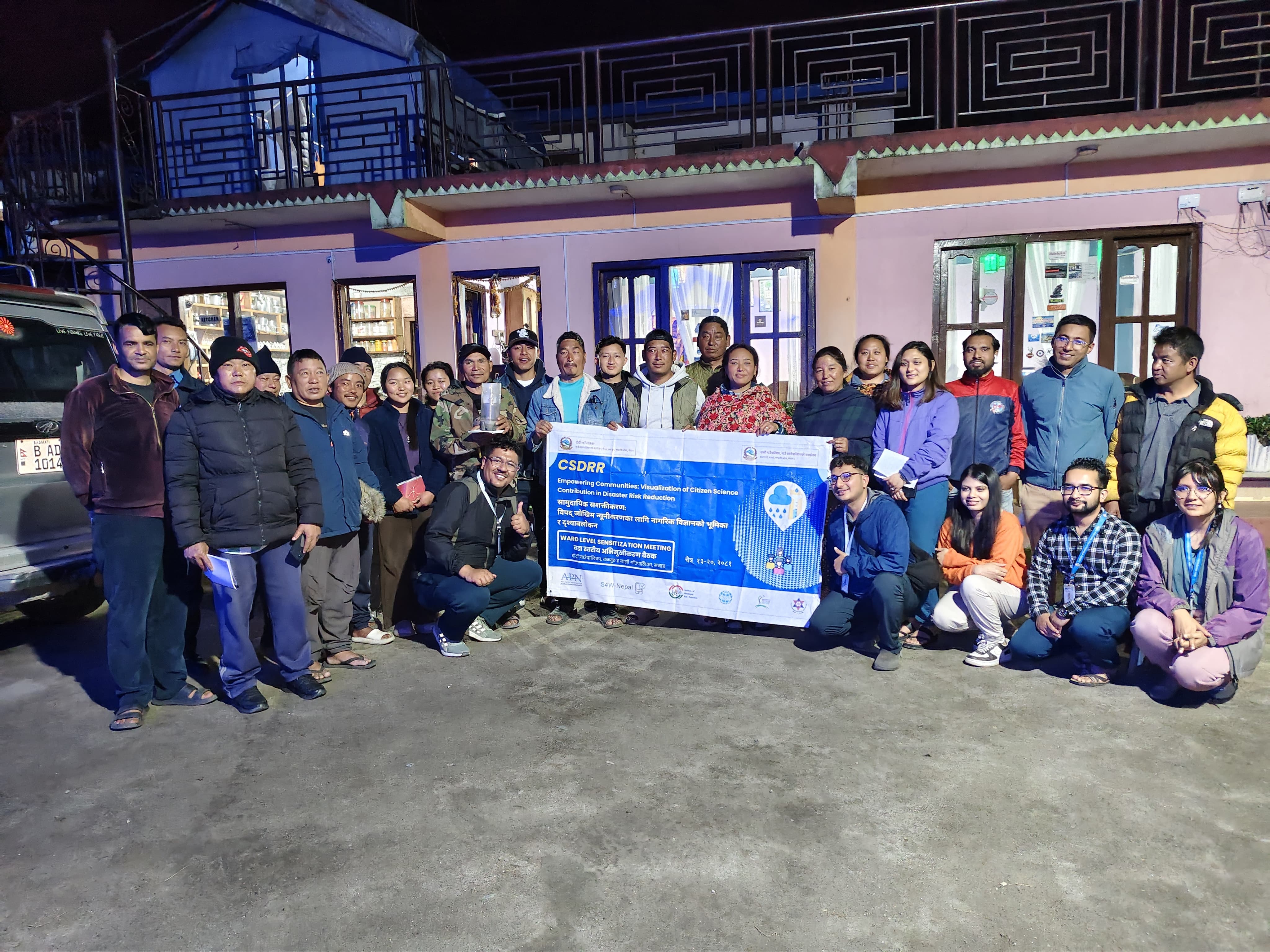
Through this initiative, over 30 trained local volunteers collect rainfall data using low-cost rain gauges made from recycled soda bottles, complemented by mobile-based reporting tools. This data is integrated into interactive dashboards with hazard layers, supporting both scientific analysis and local decision-making.
The project specifically engages youth and early-career professionals, fostering a new generation of disaster risk reduction leaders. Activities such as policy workshops, ward-level orientations, transect walks, and a citizen science summit strengthen collaboration between communities, local governments, and research institutions.
Aligned with global frameworks such as the Sendai Framework for Disaster Risk Reduction, UNFCCC, and Sustainable Development Goals (SDGs 11 & 13), the project contributes to building resilient and climate-adaptive communities.
Key Components:
Goal:
Empower communities through citizen science to improve disaster preparedness and early warning systems.
Innovation:
- Rain gauges made from recycled soda bottles
- Mobile app (VICTORY) and dashboard integration with hazard and vulnerability data.
Community Engagement:
- 35 citizen scientists ( across 18 wards) trained and mobilized.
- Leaderboard and incentive system to sustain motivation
Capacity Building:
- Manuals and training programs for citizen scientists.
- Ward-level orientations and transect walks in high-risk areas.
Technology Integration:
- Real-time data visualization on a dashboards
- Integration of citizen-generated data with municipality data for planning and action.
Expected Outcomes:
- Enhanced community-level data ownership and resilience.
- Improved disaster planning using locally generated data.
- Strengthened partnerships among communities, municipalities, and scientific institutions.
- Policy-level integration of citizen science in DRR mechanisms.