

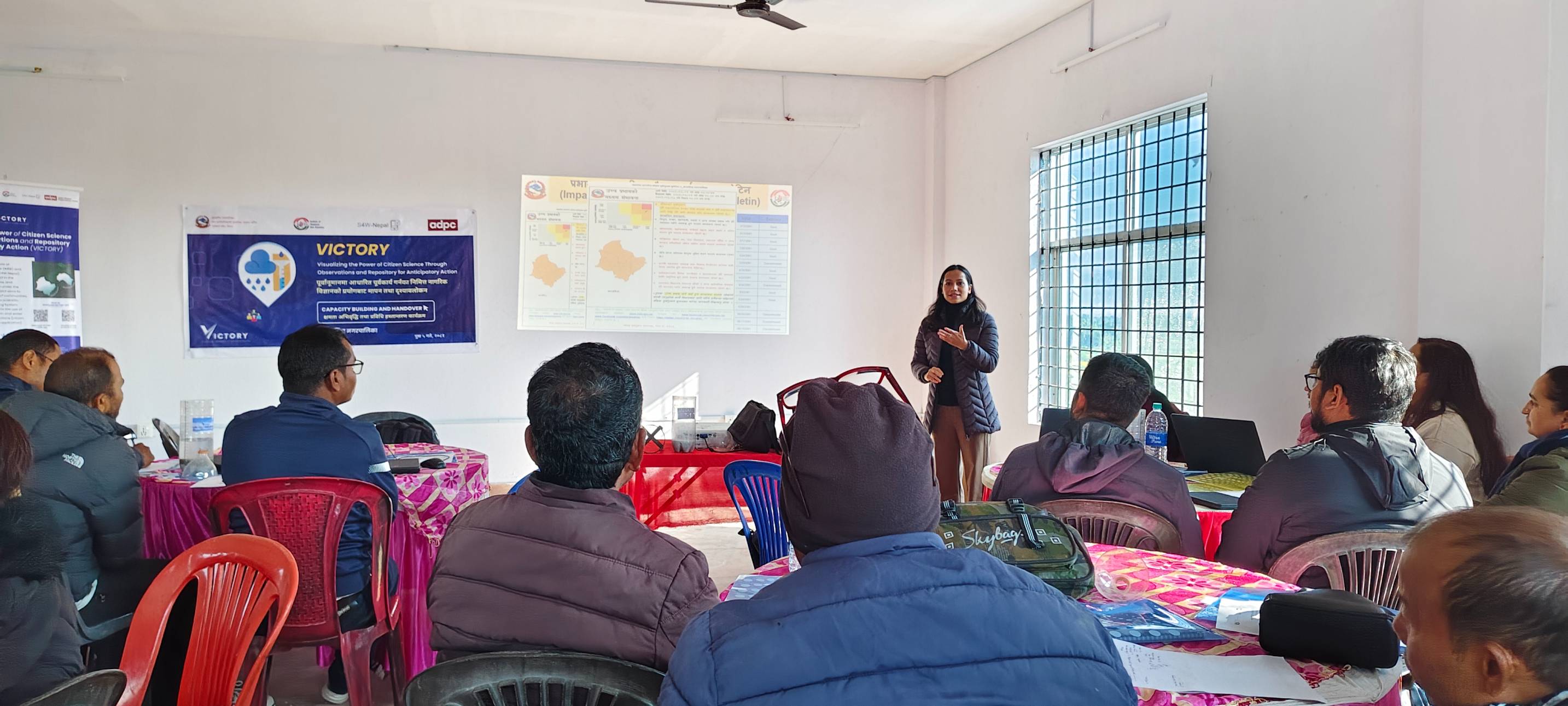
Traditional forecasts predict the weather: Impact-Based Forecasting (IBF) goes further, forecasting the consequences. Since 2021, IBF has been piloted in Nepal, and in 2024, with support from IHRR, it expanded to five municipalities—Bhimeshwor, Bhimdatta, Dodhara Chandani, Parashuram, and Barbardiya.
From 2025, IHRR has been implementing IBF in seven municipalities [Kanchanpur District (Dodhara Chandani, Bheemdatta, Parshuram, Bedkot), Dolakha (Bhimeshwor, Shailung Rural Municipality), Bardiya (Barbardiya Municipality)]
Key Features & Impact
- Color-coded warnings (Green, Yellow, Orange, Red) provide clear guidance on response actions.
- Municipal-level IBF bulletins, to support preparedness and proactive disaster response.
- Two Way Communication Mechanism
- Forecast Verification
- Stakeholder workshops strengthened coordination between local governments, emergency responders, and communities.
A review highlighted successes in awareness and preparedness while identifying challenges in data availability, forecast accuracy, and last-mile communication. Moving forward, the project aims to expand IBF coverage, refine methodologies, and strengthen community engagement for more effective disaster risk reduction.