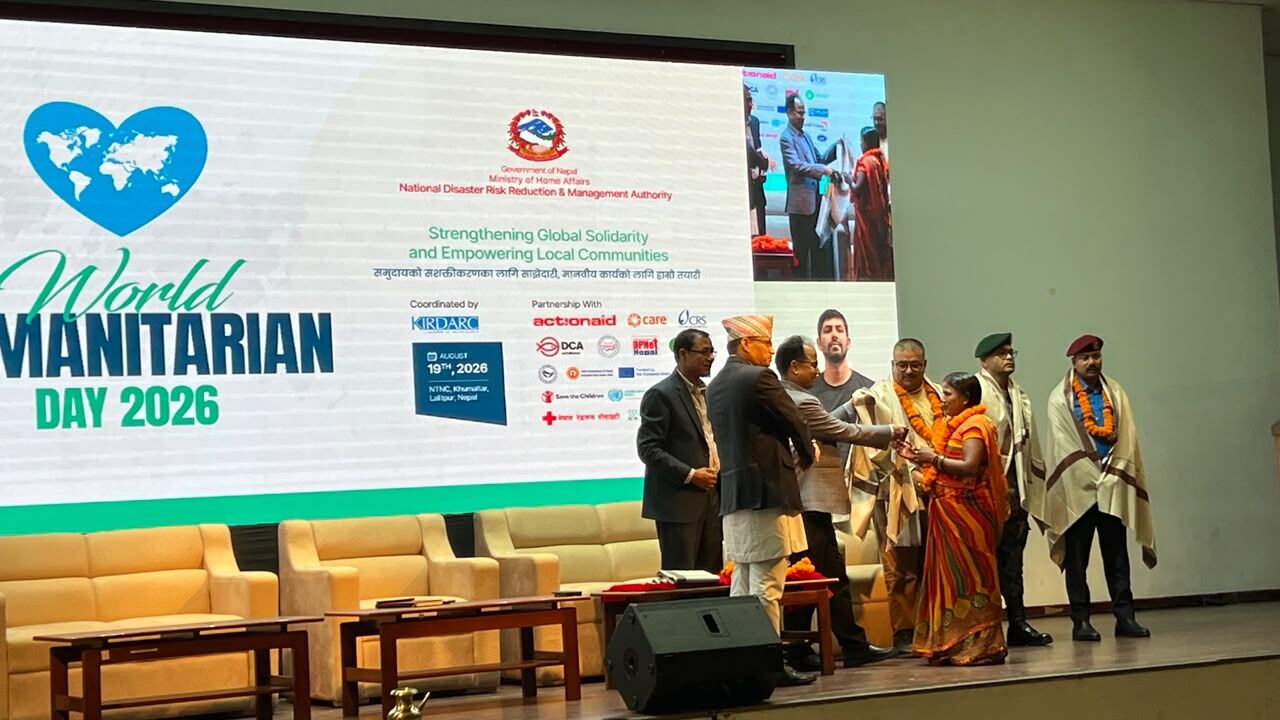
Lalitpur, Nepal, 19 August 2026: Rupkali Devi Ram of Rautahat District was recognized as a Humanitarian Hero during the World Humanitarian Day 2026 event organized by the National Disaster Risk Reduction and Management Authority (NDRRMA). The recognition celebrates her remarkable contribution to strengthening women’s voice and leadership in anticipatory action and community-based disaster risk management.
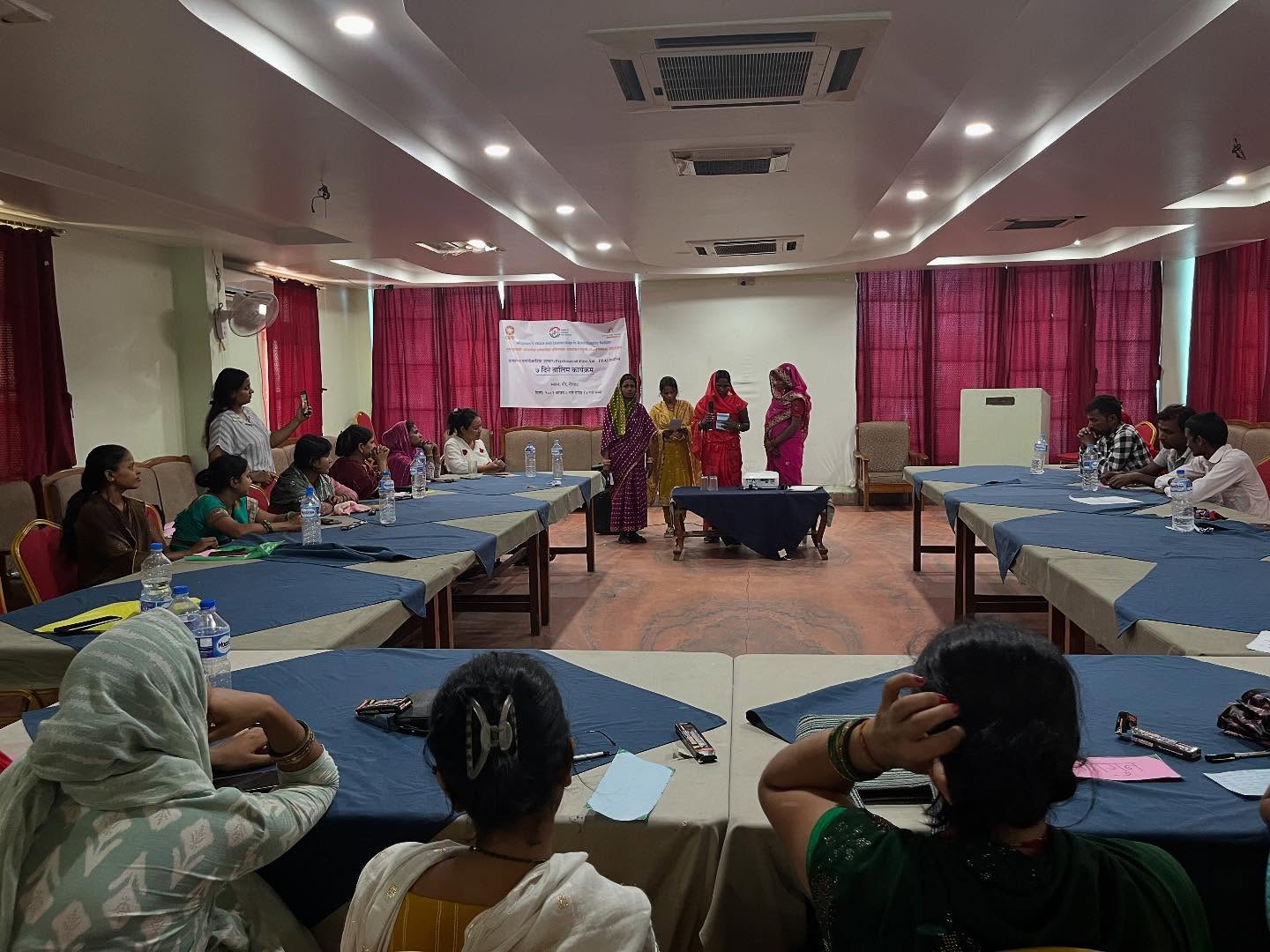
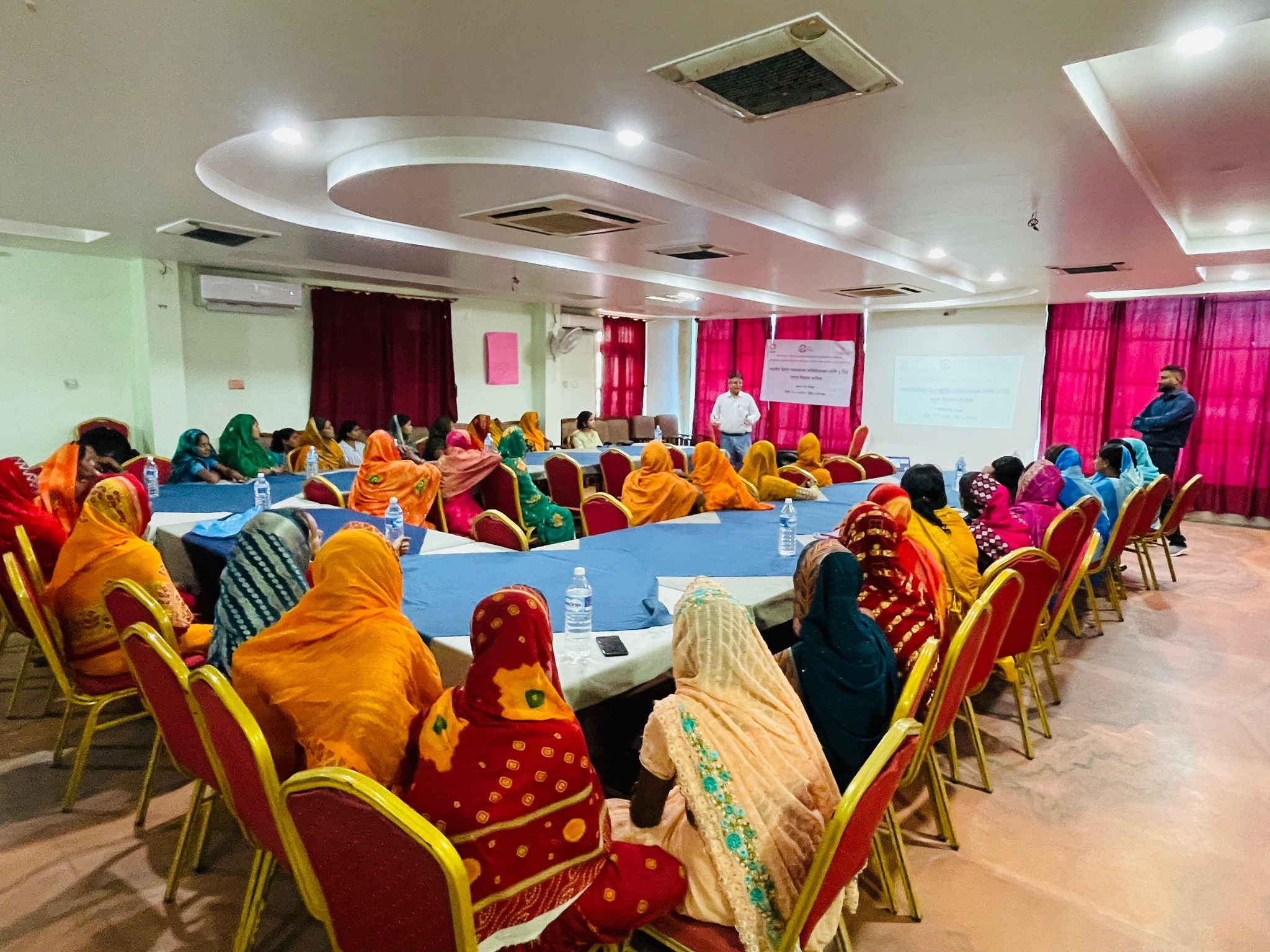
Rupkali serves as the Chairperson of the Community Disaster Management Committee (CDMC) in Laxmipur, Rajdevi Municipality–8, Rautahat. The women-led CDMC has been strengthened through Sajag Samaj, an initiative supported by CARE Nepal and implemented by the Institute of Himalayan Risk Reduction (IHRR) to advance women’s voice, leadership and meaningful participation in anticipatory action.
From Community Volunteer to Humanitarian Leader
Rupkali has consistently worked at the frontline to protect vulnerable families from multiple disaster and humanitarian risks. Working closely with other CDMC members, she monitors emerging hazards, coordinates the dissemination of early warning information and mobilizes community members when early action is required.
Her work frequently takes her door-to-door, using community miking and direct communication to ensure that warnings reach households in time. Her leadership extends across multiple risks, including floods, heatwaves, lightning, fire, and violence against women and girls.
During emergencies, Rupkali and her fellow CDMC members help translate warnings into practical action—informing households, supporting preparedness, identifying people requiring additional assistance and encouraging timely evacuation when risks escalate.
The importance of such community leadership was particularly visible during the September–October 2025 flooding in Rautahat, when women-led CDMCs demonstrated exceptional leadership in disseminating warnings, mobilizing communities and supporting early action.
A Recognition She Never Expected
For Rupkali, the Humanitarian Hero recognition was especially meaningful. She had never imagined that her community-level work would receive national recognition or that it would take her to Kathmandu for the first time.
“I never dreamt that I would be recognized for this work,” Rupkali shared. “Traveling to Kathmandu for the first time, and receiving this recognition in front of so many people, means a great deal to me. It has given me renewed strength and confidence, and I will continue serving my community with the same dedication.”
Her journey illustrates how investing in local women’s leadership can strengthen not only disaster preparedness but also confidence, participation, and community ownership of humanitarian action.
Strengthening Women-Led Anticipatory Action
Through Sajag Samaj, IHRR has been working closely with women-led CDMCs in Rautahat to strengthen community preparedness, anticipatory action and people-centred early warning systems. The approach recognizes that communities are not merely recipients of warnings or humanitarian assistance: they are central actors in understanding local risks, communicating information and initiating actions before hazards become disasters.
Women-led CDMCs have played an increasingly important role in connecting early warning information with households, particularly vulnerable groups who may otherwise be overlooked during emergencies.
Rupkali’s recognition represents not only an individual achievement but also the growing strength and visibility of women-led community institutions working at the frontline of disaster risk reduction and humanitarian action.
“IHRR is pleased to witness the increasing confidence, leadership and resilience of the communities it works with and congratulates Rupkali Devi Ram on this well-deserved national recognition. Her story demonstrates that when women are empowered to lead, early warnings can become early actions, and communities can become stronger, safer and more resilient. ”