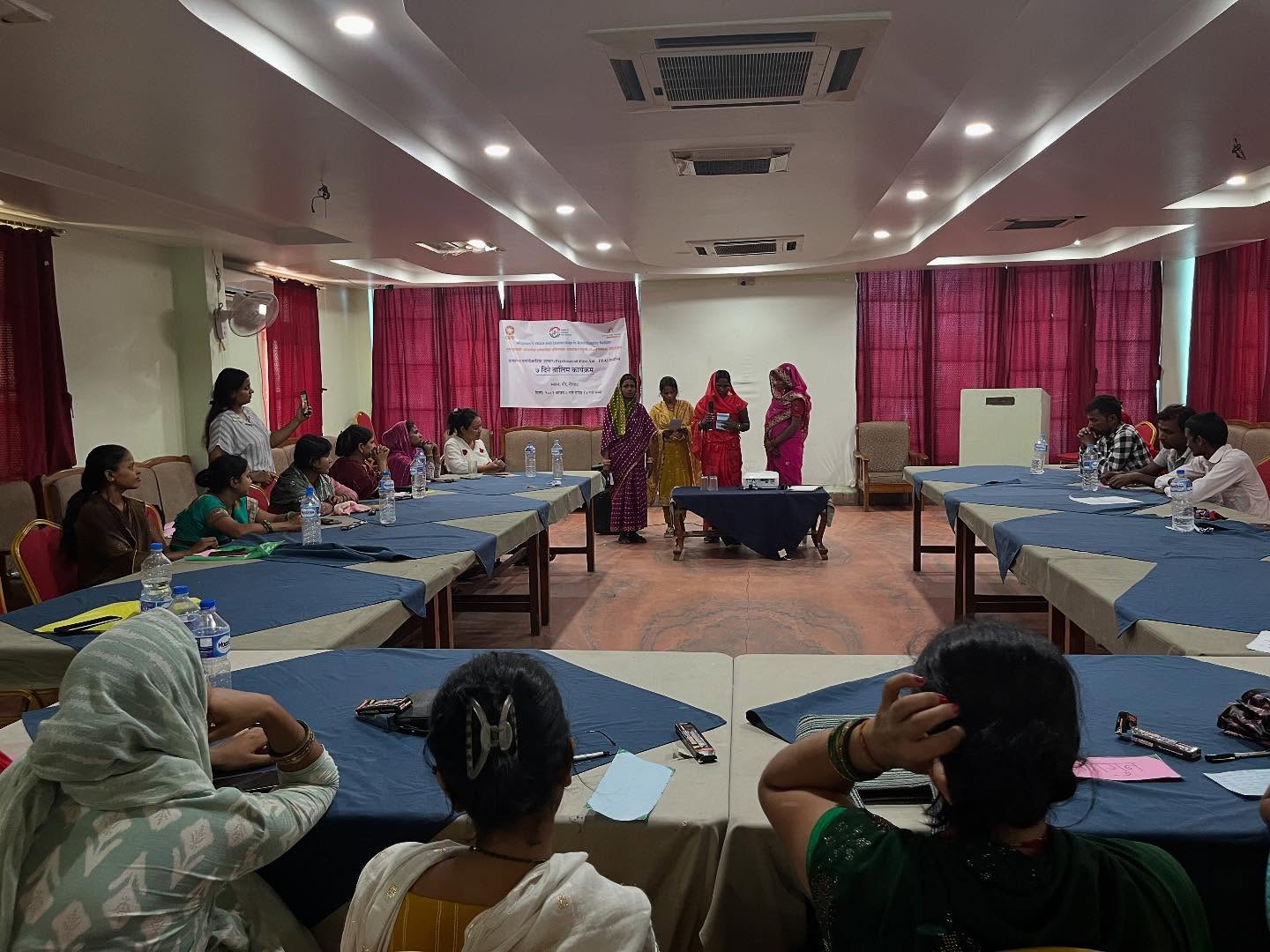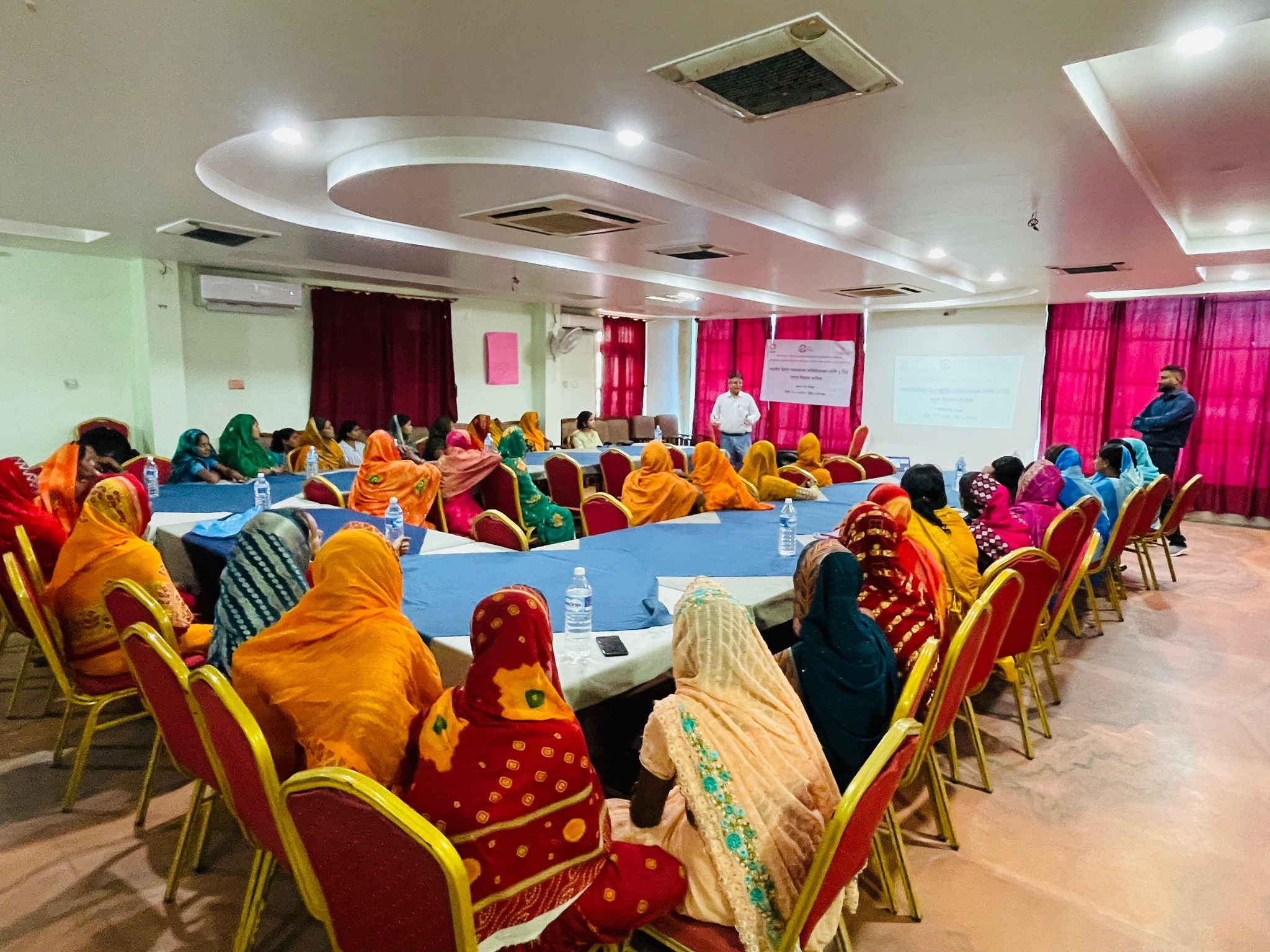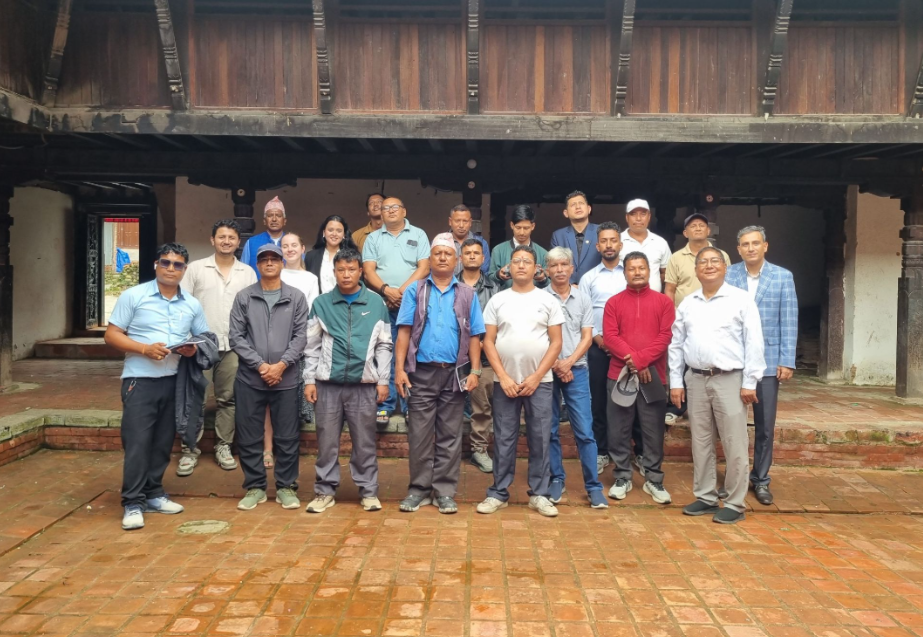
Lalitpur, Nepal, 3 September 2026: The Institute of Himalayan Risk Reduction (IHRR) organized a “Capacity Strengthening and Knowledge Transformation Workshop for Artisans and Local Masons” at the Ward No. 22 Office Hall in Bungamati, Lalitpur Metropolitan City.
The workshop was conducted under the Seismic Synergy Project, “Learning from Traditional Wisdom to Build a Resilient Future,” supported by the Toyota Foundation’s 2024 Research Grant Program. It followed the theme “From Heritage Observation to Safer Construction Practice.”
A total of 35 participants attended the programme, including local artisans, masons, community representatives, local government representatives and technical experts.
Traditional Knowledge and Structural Safety
The project team presented the objectives, activities and preliminary findings of the Seismic Synergy Project. The session introduced traditional Newari construction materials, masonry techniques, timber connections and the ways different structural elements work together.
Participants explained that limited financial security has reduced young people’s interest in traditional professions. Many members of the younger generation are more attracted to office-based work or foreign employment, while some experienced artisans hesitate to encourage their children to follow the same occupation.
The absence of dedicated training centres was identified as another serious challenge. Traditional masonry, woodcarving and related skills are still mainly transferred informally from senior artisans to family members, helpers or apprentices. As fewer young people enter these professions, this knowledge-transfer system is weakening.
The participants expressed concern that the decline in skilled artisans could make the proper repair and maintenance of traditional buildings increasingly difficult. If this knowledge is not transferred, Nepal could gradually lose its traditional buildings, craftsmanship and the cultural identity associated with them.
The Way Forward
The workshop highlighted the need for structured training and apprenticeship opportunities, fair wages, greater professional recognition and more reliable employment for traditional artisans.
Participants discussed how traditional buildings behave during earthquakes, including their stronger and weaker parts, possible crack locations and the transfer of loads through walls, floors and timber elements.
The discussion also covered risks associated with aging materials, moisture, inadequate maintenance, weak structural connections, incompatible cement-based repairs and the addition of concrete floors or extra storeys without proper structural assessment. The workshop emphasized the importance of assessing each building individually before carrying out repairs or modifications.
Knowledge Exchange with Local Artisans and Masons
The workshop served as a two-way learning platform where the project’s technical findings were discussed alongside the practical experience of local craftspeople.
Artisans and masons shared their knowledge of traditional construction materials, timber joinery, masonry methods, construction sequences and repair practices. They also reflected on changes observed in traditional buildings following the 2015 Gorkha earthquake.
The discussion recognized local artisans as important knowledge holders whose skills are essential for the appropriate construction, maintenance and restoration of traditional buildings.
Challenges Facing Traditional Craftsmanship
Local craftspeople identified low wages and irregular employment as major difficulties. Traditional craftsmanship requires years of learning, considerable physical effort and long working periods, but the income often does not reflect the level of skill and commitment required.
It also emphasized the importance of cooperation among craftspeople, communities, local governments, technical experts, educational institutions and heritage organizations. Such collaboration can help combine traditional knowledge with modern safety requirements while making craftsmanship a viable profession for younger generations.
The experiences and recommendations collected during the workshop will contribute to the Seismic Synergy Project’s ongoing research, learning materials and guidance for safer and heritage-sensitive construction. The workshop demonstrated that protecting traditional Newari architecture requires attention to both the safety of the buildings and the skills of the people who sustain them.