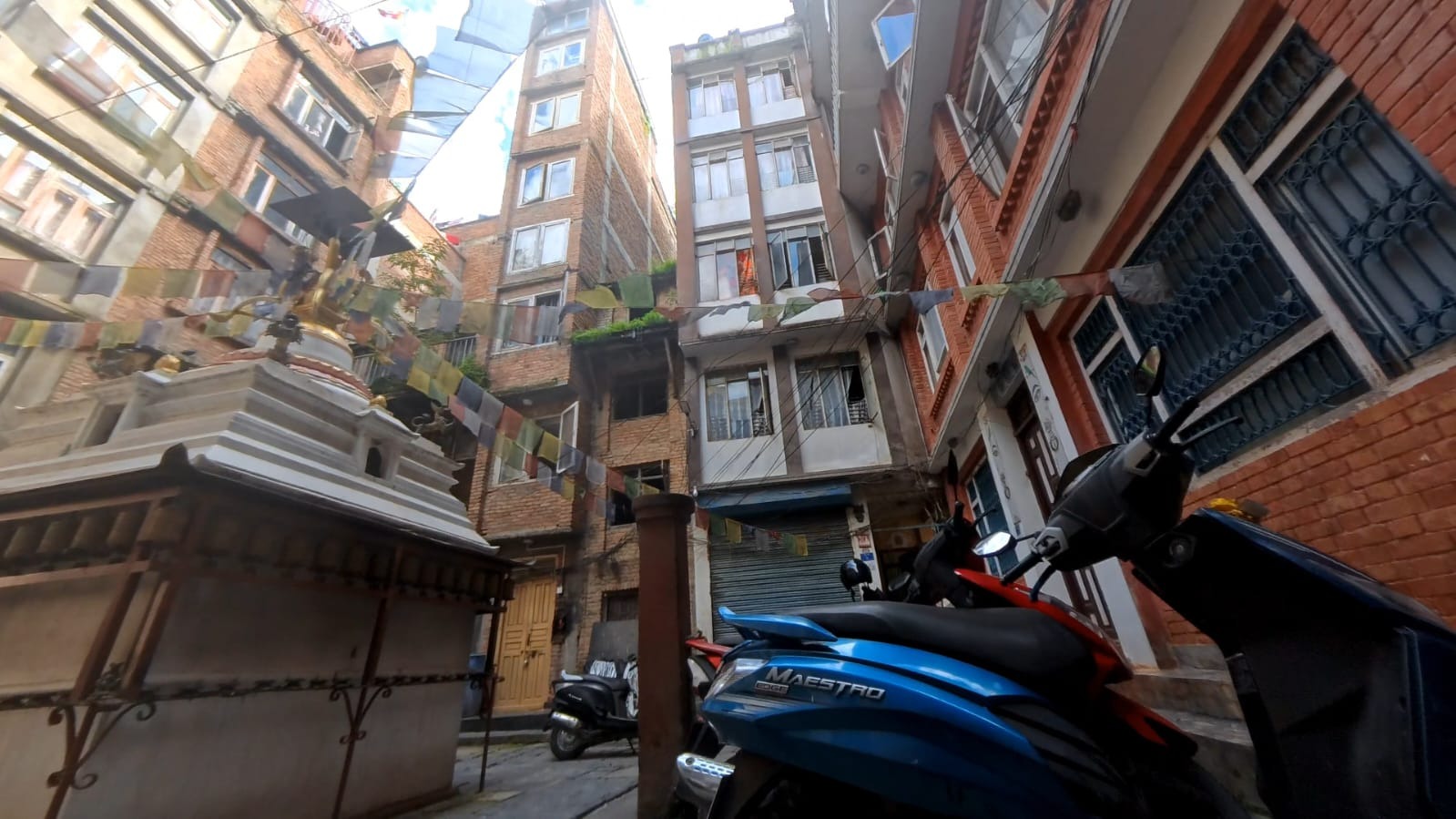
The project documents and preserves traditional earthquake-resilient building practices in selected municipalities of Kathmandu Valley and assesses their structural and seismic performance using modern tools and approaches. It promotes knowledge exchange between traditional craftsmen and modern engineers while exploring opportunities to combine traditional wisdom with contemporary engineering practices. The project also develops culturally grounded learning materials and conducts educational and outreach activities for schools and communities. Findings from field documentation, historical analysis, structural assessment, and community engagement will inform recommendations for integrating traditional knowledge into contemporary disaster resilience and building practices.
Details in Bullet:
- Document and digitize traditional earthquake-resilient structures.
- Conduct field surveys and interviews with local builders and traditional artisans.
- Use BIM and other digital tools to recreate and document traditional structures.
- Explore oral histories, cultural narratives, and historical records related to traditional construction.
- Analyze the evolution of traditional construction techniques and materials.
- Assess the structural and seismic performance of traditional buildings.
- Compare traditional design elements with modern engineering standards.
- Conduct Rapid Visual Assessment (RVA) to classify building vulnerability by typology.
- Develop culturally relevant disaster risk reduction and earthquake education materials.
- Organize workshops for students, educators, NGOs, engineers, and traditional craftsmen.
- Conduct interactive learning activities for children on traditional construction techniques.
- Facilitate knowledge exchange between traditional craftsmen and modern engineers.
- Explore hybrid construction approaches combining traditional and modern techniques.
- Develop policy recommendations for preserving and integrating traditional earthquake-resilient knowledge.
- Explore preservation approaches inspired by international practices, including Japan's cultural heritage protection framework.
The project is implemented by:
- Institute of Himalayan Risk Reduction (IHRR)
- Global Multi-Campus Institute, Nagoya University
It is implemented in collaboration with local communities, traditional craftsmen, engineers, educators, and relevant stakeholders to document, assess, and promote traditional earthquake-resilient construction practices.